
Loading articles...

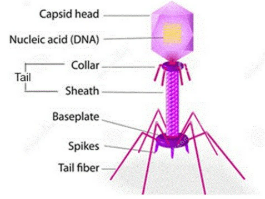
In the microscopic world, bacteria evolve as cunning tacticians, rapidly outpacing the drugs invented to restrain them. Antibiotic resistance has recast into a war of attrition—and the microbes are winning. Despite humanity meeting its Waterloo in the race between the tortoise and the hare, humanity's parasitic friends, bacteriophages, emerge as a promising solution to this escalating crisis.
Antibiotics have been widely recognized as a "silent pandemic," as most of the population remains oblivious to the eroding state of antibiotic care. Like Darwin's finches, bacteria quickly utilize natural selection to combat antibiotics. Prescriptions extinguish the bulk of all microorganisms, permitting the minute survivors left to mutate and acquire a defense inimical to antibiotics, forming superbugs. In addition, a study tested 137 strains of E. coli in UTIs, and "the results showed widespread resistance (51.1 – 91.2%)" (Olorunmola, et al.). There are millions of bacteria worldwide, and the pathogens will grow if unchecked. The pandemic operates as an indomitable blaze, where water only fuels the flames.
One promising avenue is bacteriophage therapy. Derived from bacterio- (bacteria) and the Greek word phagein (to devour), bacteriophages are viruses that specifically target and destroy bacteria.
Incredibly abundant, “it’s estimated there are more than 10³¹ bacteriophages on the planet… more than every other organism on Earth, including bacteria, combined” (Scott and Buschman). They contain a decahedron head full of DNA, spikes to latch onto their prey, and a baseplate to inject DNA. As ubiquitous as they are plentiful, they are found in soil, water, skin, and virtually all environments.
Discovered in 1896 by Ernest Hanbury Hankin and advanced by George Eliava, phages infect bacterial cells, replicate inside, and lyse them to release their progeny. Their specificity ensures they attack only one bacterial species, leaving human cells and helpful microbes untouched.
As a master’s student in biology put it: “These deadly viruses provide a multitude of opportunities for the scientific field; the hardest part is ensuring society recognizes it.”
Unlike antibiotics, which target all bacteria indiscriminately, each phage is built to target a specific bacterial species. Unlike antibiotics, which often struggle against bacterial biofilms—fortress-like structures protecting bacteria—phages can penetrate these barriers (Sapkota).
They can clear biofilms by “actively penetrating their way into biofilms by lysing one bacterial layer at a time, or due to the display of biofilm exopolymer-degrading depolymerases” (Loc-Carrillo). Phages also have a natural "auto-dosing" ability, making them self-regulating treatments (Abedon).
Are phages safe? Research confirms that bacteriophages are non-toxic and have no side effects (Liu, Dan, et al.). Treatments are also up to 50% cheaper than antibiotics (Verbeken, Gilbert, et al.).
As bacteria evolve resistance, phages evolve alongside them, creating a natural arms race. Interestingly, bacteria that evade phage attacks often become more vulnerable to antibiotics—a molecular catch-22 (Li, et al.).
Bacteriophages offer a sustainable, precise, and powerful response to antimicrobial resistance. As superbugs rise, phage therapy may be the key to revolutionizing healthcare and ensuring humanity stays ahead in the battle against microbial threats.
Raine Waverka is a budding phage researcher exploring CRISPR and oncology through elite science programs at Vanderbilt and Boston University.
Dr. Georgios Karagiannis, a distinguished cardiologist and researcher, continues to shape the field of heart failure and preventive cardiology through his medical expertise and academic dedication.
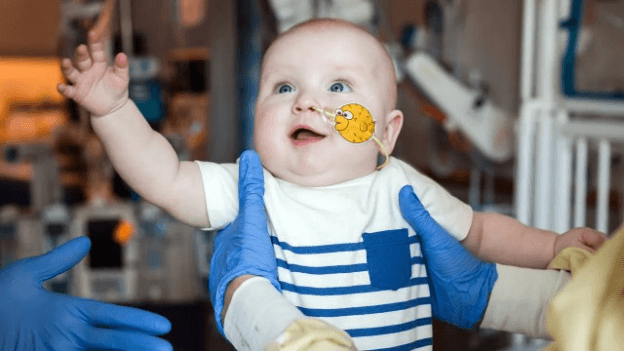
A historic CRISPR breakthrough gives an infant with a rare genetic disorder a second chance at life—ushering in a new era of personalized medicine.